



Home solar & backup power

Backup power for your home, sized with real numbers.

FoxyEco explains portable power stations, home batteries, solar panels and off-grid kits in plain English: what a watt-hour buys you in an outage, what the spec sheet leaves out, and when the job needs an electrician.

Written from manufacturer documentation, safety standards and shown arithmetic. No invented lab tests.

Start here

Work out what you actually need

Latest

New and updated

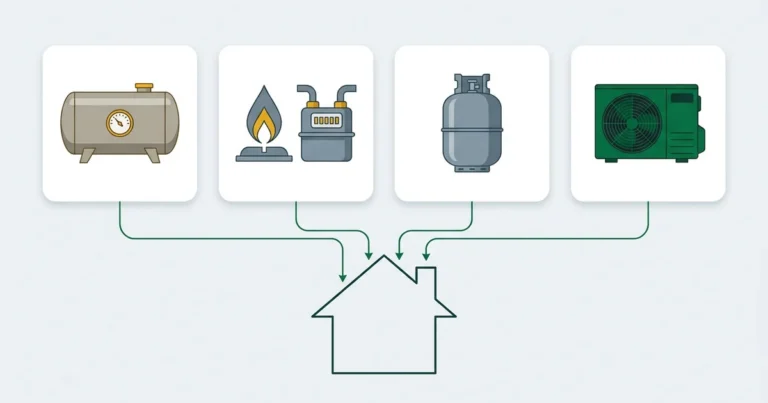
Heating Oil vs Heat Pump & Gas Cost Calculator
Calculator · Climate & Efficiency

Heating Oil vs Heat Pump & Gas Cost Calculator

Compare annual winter heating costs and cost per million Btu across heating oil, propane, natural gas, electric baseboard and a heat pump at your…
Ben Carver Nov 18, 2026 7 min read
Solar, Battery and Heat Pump Incentive Checker (2026)
Calculator · Home Batteries & Backup

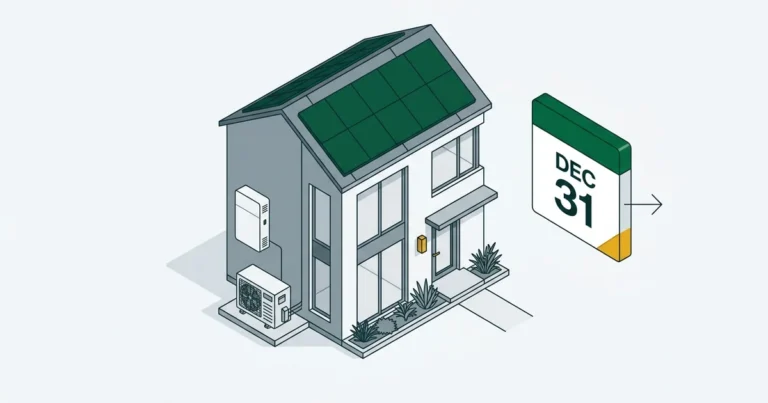
Solar, Battery and Heat Pump Incentive Checker (2026)

Check whether the 30% federal solar, battery or heat pump tax credit still applies in 2026 by installation date and state, with IRS and…
Ben Carver Nov 18, 2026 5 min read
Virtual Power Plants and FERC Order 2222: Can Your Home Battery Earn Money in 2026?
News · Home Batteries & Backup

Virtual Power Plants and FERC Order 2222: Can Your Home Battery Earn Money in 2026?

FERC Order 2222 lets aggregated home batteries into wholesale markets, but most households join a utility program instead. What enrolment involves and what to…
Iris Hollander Oct 16, 2026 5 min read
Monvane Modular Sofa Review: Documented Specs, Warranty and Return Terms
Review · Better Materials

Monvane Modular Sofa Review: Documented Specs, Warranty and Return Terms

A documentation-based look at Monvane's compressed modular sofas: how they ship and expand, what the published warranty and return policy cover, care limits on…
Iris Hollander Oct 16, 2026 5 min read
Vellgus LED Panels: Rated Power, Electricity Use and Circuit Limits
Review · Energy & Water

Vellgus LED Panels: Rated Power, Electricity Use and Circuit Limits

What Vellgus's published power ratings mean for your electricity bill, household circuits and backup power: nameplate watts, how to measure real draw, cost per…
Iris Hollander Oct 15, 2026 5 min read
AlorAir Sentinel HDi90 Review: Specs, Pump Drainage and Who Needs a 90-Pint Crawl Space Unit
Review · Climate & Efficiency

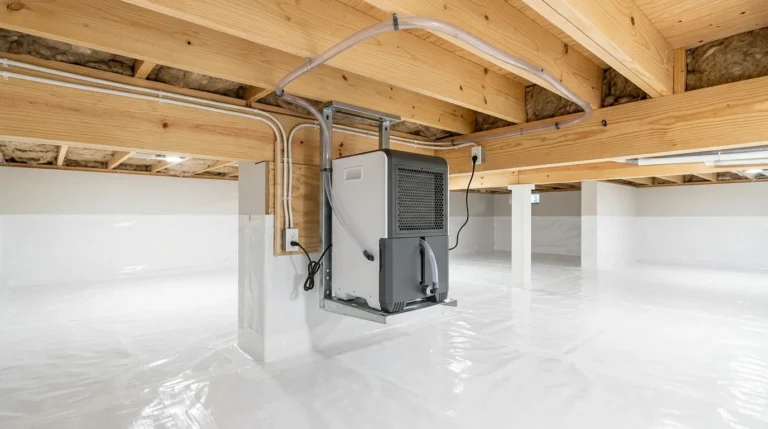
AlorAir Sentinel HDi90 Review: Specs, Pump Drainage and Who Needs a 90-Pint Crawl Space Unit

A documentation-based review of the AlorAir Sentinel HDi90: published capacity, rated current, built-in condensate pump, low-temperature operation, price as of November 2026, and the…
Iris Hollander Oct 15, 2026 5 min read
ALLPOWERS R-Series Review (R600 to R4000): Which LiFePO4 Model Fits Home Backup
Review · Power Stations & Solar Generators

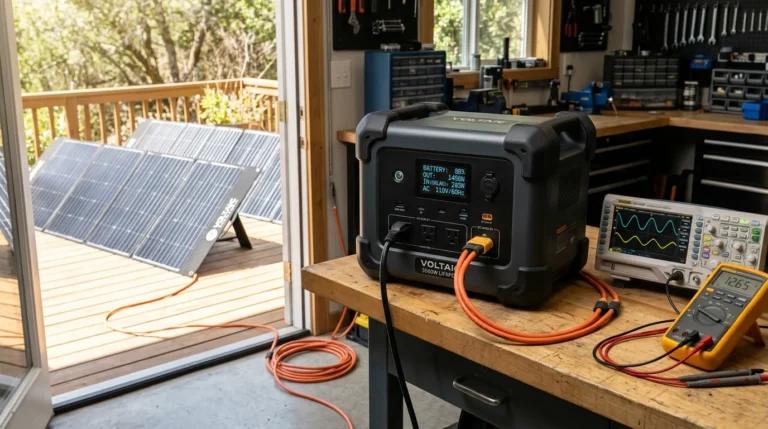
ALLPOWERS R-Series Review (R600 to R4000): Which LiFePO4 Model Fits Home Backup

ALLPOWERS R-series review from published specs: R600, R1500, R2500, R3500 and R4000 capacity, output, solar input and expansion, with who each model suits and…
Iris Hollander Oct 15, 2026 7 min read
Eco-Worthy Cubix100 48V Rack Battery and Solar Kits Review: Specs, Install Needs, Limits
Review · Home Batteries & Backup

Eco-Worthy Cubix100 48V Rack Battery and Solar Kits Review: Specs, Install Needs, Limits

Eco-Worthy Cubix100 review from published specs: 51.2 V 100 Ah (5.12 kWh) LiFePO4 rack battery, inverter compatibility, UL listings, kit contents and what a…
Iris Hollander Oct 15, 2026 6 min read
Nature’s Generator Powerhouse 7200 Gen 2 Review: 120/240 V Home Backup, Specs and Limits
Review · Power Stations & Solar Generators

Nature’s Generator Powerhouse 7200 Gen 2 Review: 120/240 V Home Backup, Specs and Limits

Nature's Generator Powerhouse 7200 Gen 2 review from published specs: 7,200 W split-phase output, 4,800 Wh battery, 2,000 W solar and 1,000 W wind…
Iris Hollander Oct 14, 2026 6 min read

Reference guide · Shown arithmetic

How to Size Home Backup Power, Solar Panels & Off-Grid Loads

Sizing a portable power station, whole-home LiFePO4 battery bank, or off-grid solar array starts with two separate electrical figures on every appliance nameplate: continuous running watts (W) and starting surge watts (W). Battery capacity printed on the box is nominal cell energy in watt-hours (Wh), not the AC energy delivered at the receptacle after depth-of-discharge limits and inverter conversion losses.

1. Usable Battery Capacity & Inverter Overhead

Lithium iron phosphate (LiFePO4) packs typically reserve 5% to 10% of state-of-charge via the battery management system (BMS) to prevent cell under-voltage, while pure sine wave inverters convert DC battery power to 120V or 240V AC at roughly 85% to 92% efficiency. In addition, the inverter itself draws 15 W to 45 W of idle tare load whenever the AC output switch remains active.

To estimate realistic outage runtime, apply the formula: Usable Wh = Nameplate Wh × 0.85, and divide by (Appliance Average Watts + Inverter Idle Watts). A 2,048 Wh LiFePO4 power station delivers approximately 1,700 to 1,750 Wh at the AC outlets—enough to run a 65 W average refrigerator duty cycle plus a 15 W router for roughly 18 to 21 hours before recharging. For motor-driven loads such as deep-well pumps, sump pumps, or window air conditioners, verify that the inverter's instantaneous surge rating exceeds the compressor's locked-rotor amps (LRA × Volts), which can reach 3× to 5× continuous running wattage for 100 to 500 milliseconds.

2. Solar Array Matching: Voc, Vmp & Cold-Weather Headroom

Every MPPT charge controller enforces a strict maximum DC input voltage ceiling (for example, 60V, 100V, or 150V) and a maximum input current cap in amps (A). While exceeding the current rating simply causes the MPPT tracker to clip excess amperage safely, exceeding the maximum input voltage—even briefly on a clear winter morning—can permanently damage the input MOSFET stage.

Photovoltaic open-circuit voltage (Voc) is rated at Standard Test Conditions of 77°F (25°C) cell temperature. As ambient temperature drops below freezing, silicon cell voltage rises by roughly 0.28% to 0.35% per degree Celsius. Following National Electrical Code (NEC 690.7) cold-weather multipliers, keep the combined series string Voc at least 15% to 20% below your power station's maximum DC input voltage limit. For daily energy planning, calculate realistic solar harvest as Daily Wh ≈ Rated Panel Watts × Peak Sun Hours × 0.70 to account for cell heating, cosine sun angle, wiring voltage drop, and MPPT conversion efficiency.

3. Transfer Switches, DC Bus Voltage & Climate Loads

Connecting backup power to household branch circuits requires a UL 1008 manual transfer switch or a listed breaker interlock kit installed by a licensed electrician so utility lines are physically isolated from battery or generator output. Standard 120V power stations can feed single-pole circuits (refrigerator, gas furnace blower, lighting, Wi-Fi), whereas multi-wire branch circuits (MWBCs) and 240V well pumps or electric dryers require a true 120V/240V split-phase inverter.

For stationary cabin, RV, or shed battery banks, raising nominal DC bus voltage from 12V to 24V or 48V cuts wire current in half or by a factor of four (Amps = Watts ÷ Volts), allowing smaller AWG copper conductors and higher-wattage solar charge controllers. Finally, before sizing a larger battery bank for heating or summer cooling, reduce thermal demand first: exterior window shading, air sealing, and high-SEER2 variable-speed heat pumps or ENERGY STAR dehumidifiers cut continuous watt draw far more cost-effectively than adding extra battery modules.